


 Sign in
  Create Account



From a kitchen table in Sicily to a travel platform for all of Panama
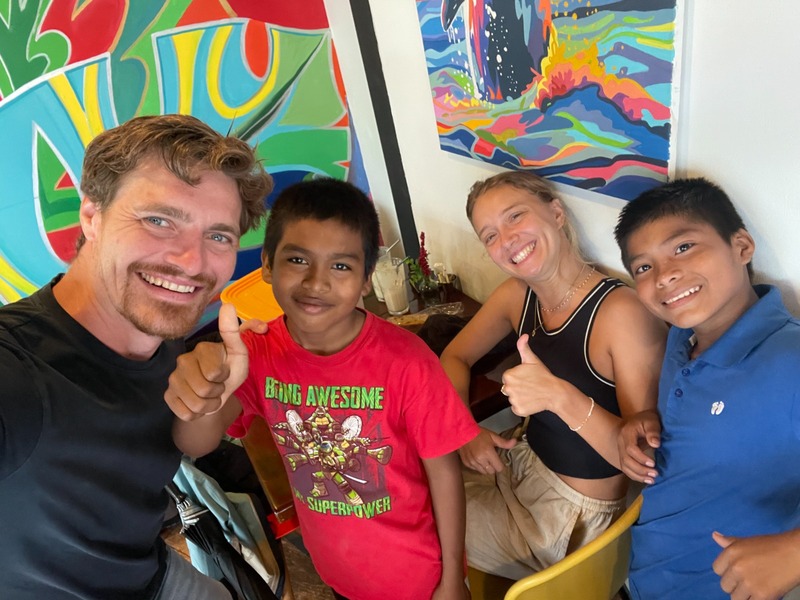
Some ideas begin with a vision. This one began with a stack of paper notes nobody could carry outside the house. It was August 2025, in a small Airbnb in Sicily.
The hosts had prepared everything a guest could ask for. Thick folders filled with recommendations, local restaurants, hidden beaches, bus timetables, nearby vineyards. All of it beautifully organized. And all of it completely useless the moment you walked out the door.
Standing in the kitchen that evening, an Austrian couple started to wonder. What if this kind of local knowledge actually traveled with the guest? Not as a folder on a table, but as something simple on their phone that worked anywhere, anytime. That conversation would eventually turn into KUNO, a curated travel guide for Panama. But to understand how a holiday in Sicily led to a platform for Bocas del Toro, you have to go back a bit further.
Two people and a passion for traveling
Benjamin and Juliana are from Vienna. They have known each other since they were kids. In their early 20s, they became a couple, and traveling together was part of the relationship from the very beginning.
The first big trip was Thailand, a full month of it. From then on, they made a promise to themselves. At least once a year, they would spend a month in a new country. Over time, that promise took them to the Philippines, Oman, Mexico, Ecuador, Colombia, Georgia, Croatia, Greece, Spain, Italy, and many more. Different continents, different cultures, but always the same approach. Travel slowly. Learn the place. Talk to locals. Find what guidebooks miss.
The love for travel came from very different places. For him, it started at 19, during a year of civil service in Ecuador working with niños trabajadores, children in difficult circumstances. He came back fluent in Spanish and with a deep bond to Latin America. For her, travel had always been part of life. Her mother is a flight attendant, and from an early age she was taken along to places most kids only hear about. A year as an exchange student in Barcelona later deepened her love for new places and new cultures.
By the time they went to Costa Rica in 2025, they had been traveling together for almost a decade. That trip was supposed to be about Costa Rica. Instead, it ended, almost by accident, in Panama.
Twelve days that changed the plan
The border crossing to Bocas del Toro was not easy. A bus dropped them at Sixaola with no clear instructions on how to continue. The internet offered almost nothing. Only because both of them spoke Spanish could they ask around, piece together the route, and find the next bus. It was a small moment, but a telling one. There was something missing here.
Then came the islands. Twelve days in Bocas del Toro, and by the end of it, something had shifted. The place had a wild honesty to it. People welcomed them like they belonged. They made friends, found favorite spots, and felt rooted in a way that is rare after less than two weeks anywhere.
They also noticed, in those twelve days, how much of the local offering was practically invisible online. One example stayed with them for months afterwards. A German biologist, who had moved to Panama years ago after writing her doctorate on the poison dart frogs of Red Frog Beach, now offered guided jungle tours. On her walks, you could see sloths, toucans, howler monkeys, and the famously colorful frogs that most tourists hardly ever get to see with their own eyes. Her expertise was extraordinary. Her tours were, by all accounts, among the best things you could do on the island.
Still almost nobody booked her. Her contact details were nowhere to be found online. You stumbled onto her through a hotel receptionist, through a conversation at a bar, through luck.
That felt wrong. And it felt fixable.
From guest folders to a travel guide
A few months later came the kitchen table in Sicily, the paper folders, and the first version of the idea. In the beginning, it was not meant to be a travel guide at all. The original plan was to build digital guest folders for apartment hosts and Airbnbs. Everything a guest needs during a stay, from check-in codes and WiFi passwords to appliance instructions and local recommendations, all in one simple digital format that could travel on a phone.
In February 2026, the couple moved to Panama for three months to test the concept on the ground. Two months in Bocas, followed by Boquete, Santa Catalina, and San Blas. Hosts and small hotel owners were approached and pitched. The feedback was almost unanimous and surprisingly clear. The idea was good, but no host wanted to maintain the content themselves. Keeping recommendations fresh, updating opening hours, adding new restaurants- nobody wanted that extra work.
What they said, over and over, was essentially this. If you take care of the content, this is brilliant. If we have to do it, it won’t happen.
That feedback rewrote the project. Instead of giving hosts a tool to fill, the next version would be a full travel guide, curated end to end by a team on the ground. The idea was simple. Visit the places, make the recommendations, keep everything current, and let travelers find trusted information in one place. Local businesses would reach visitors directly, with no commission to international platforms sitting in between.
The new platform got a name: KUNO.
How it works Today
Every listing on KUNO is reviewed thoroughly by the team, and each one goes through an editorial decision before it goes live. A business is only published if it meets the platform’s standards. No algorithmic clutter, no fake reviews, no automatic listings. Just a real guide, curated by people who were actually there.
Travelers can explore destinations, discover trusted local businesses, and connect directly with them by WhatsApp, phone, or website. There are no booking fees, no commissions, and no middlemen. When a tour operator or a hotel is found through KUNO, the traveler reaches out to the business directly.
This is one of the ideas behind everything the platform does. Keep the value with the local community instead of handing a large share of every booking to international platforms. Panama’s tourism should benefit the people who actually create it, from the family-run guesthouse to the local tour guide with twenty years of experience.
The platform is currently live in five destinations. Bocas del Toro, Santa Catalina, El Valle de Antón, San Blas, and Coronado. Over the next twelve months, Boquete, Panama City, Santa Fe, Boca Chica, and others will follow. The goal is clear. KUNO should become THE information platform for travelers in Panama. The place you open on your phone when you want to know what to do, where to eat, how to get there, and who to trust.
A project built one conversation at a time
What makes a project like this work is not technology. It is the people who open doors along the way.
At a party in Bocas, by coincidence, they met a man who had emigrated from Saint Barth and now ran a small apartment hotel with a few casitas on the island. A conversation about Panama turned into a conversation about KUNO. He loved the idea and introduced the couple to a woman who runs a small museum in Bocas, dedicated to the history of the Chinese community on the islands, a presence that goes back centuries and that most visitors never discover.
She has become one of KUNO’s strongest advocates. She believes travelers to Panama deserve a real, curated platform, and she has been quietly connecting the project to the right people across Bocas ever since.
That is how KUNO is being built. Through conversations, introductions, and one listing after another.
Playa Bluff
If you ask about their favorite place in Panama, the answer comes without hesitation. Playa Bluff, on Isla Colón in Bocas. The most beautiful beach in the world, is how they describe it. Wild, undeveloped, almost free of plastic and seaweed, with a sea that is powerful and alive. They drive out there regularly, just to walk along the shore.
What is striking about Playa Bluff is how few visitors actually make it there. The beach is well known, but most tourists who come to Bocas spend their short stay going from hotel to boat and from boat to tour, hopping between the usual island stops. Walking a beach like Playa Bluff is simply not part of the standard itinerary. And yet it is one of the places that stays with you long after the trip is over.
In many ways, that beach captures what the project is really about. Panama is still full of places like this. Hidden corners, local experts, honest food, real experiences. The hope is that every traveler who comes here finds their own version of Playa Bluff. Not necessarily the same beach, but the same feeling.
How you can be part of this
KUNO is still in its early days, and the project grows every month because of the people who choose to be part of it.
If you are an expat living in Panama, you probably know travelers who are planning to visit. Recommending KUNO to them is one of the simplest ways to support the project. And if you have a hidden gem of your own, a tour nobody writes about, a restaurant that deserves more attention, a guide who should be on the map, please share it. The platform grows through tips like that.
The team is also actively looking for people who want to support what is being built here. Through connections, ideas, partnerships, or just a conversation that leads somewhere unexpected.
If you run a tourism-related business in Panama, whether that is a tour, a restaurant, a hotel, a rental, a transport service, or anything else travelers rely on, there is a place for you on the platform. Just get in touch, and the team will take it from there.
For businesses that want more visibility and want to support KUNO at the same time, there are also Premium Partner profiles. These include a full dedicated page, prominent positioning across destinations, and much more. The first few Premium Partners for the upcoming high season are being onboarded right now.
The best way to reach the team is contact@kunoguide.com, or just visit kunoguide.com.