


 Sign in
  Create Account



Global Coral Reef Monitoring Network Publishes Study
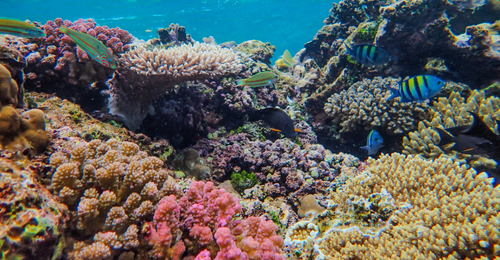
"Corals can still regenerate if sea temperature rise is controlled and coastlines are protected." Says a report, ’Status of the World’s Coral Reefs published by Global Coral Reef Monitoring Network.
This report is the largest study in history, with 21.1 million observations in more than 36,000 locations in 120 countries. The study warns that the deterioration of coral reefs has accelerated rapidly following mass bleaching events – episodes of thermal stress that cause coral death when sea temperatures rise excessively – recorded since 2010.
Environmental episodes have become recurrent, and this frequency of thermal shocks prevents the ecosystem from recovering in time; however, if recovery windows occur, the coral can still regenerate, the report states.
In statements to EFE, the lead author of the report, Dr. Manuel González Rivero , said that the data confirms that the ecosystem “ maintains its capacity for regeneration ”.
“It’s quite reasonable to say, based on the results of this report, that we haven’t yet reached a point of no return. There is a worrying pattern of increasing degradation, but whenever there is sufficient time between bleaching events, the reefs show signs of recovery,” the researcher explained.
Proof of this resilience is that, when the sea gives a thermal respite, the coral regains ground: between 2017 and 2019 - after the great bleaching recorded between 2014 and 2017 - the surface area of live hard coral rebounded by 6% worldwide.
The document highlights that 104 million people now live within five kilometers of a reef - an increase of 46% in two decades - which intensifies both the pressure on the environment and human dependence on its resources, on which nearly one billion people worldwide depend.