


 Sign in
  Create Account



Leatherback turtles reutrn to Panama after decades
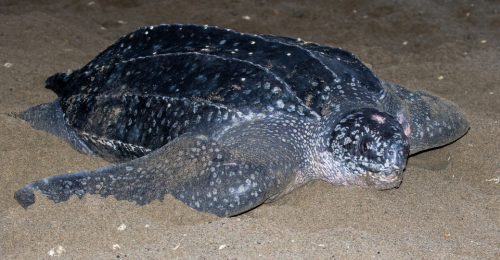
Community conservationists in the remote Pacific coast town of Jaque, in Panama’s Darien province, have recorded leatherback turtle nests this year for the first time in nearly three decades.
The return of the leatherback is one of the visible signs that conservation is working in Jaqué. During nesting season, eggs are relocated to hatcheries so they are not dug up by poachers or animals like dogs. Iver Valencia Gamboa, a conservationist in the area, states that in the last 20 years, the area has seen an increase in turtles due to these conservation efforts. The protective organization for sea turtles and biodiversity aims to continue educating and employing locals to help protect sea turtles in the area.
Iver Valencia Gamboa started this grassroots initiative to end the long-standing practice of consuming turtle eggs and the capture of sea turtles for their meat.
Alongside volunteers, Iver began with five nests, which he monitored to collect the eggs, relocating them to a safer area and striving to replicate natural conditions as closely as possible.
As night fell, Iver found the first five nests had been dug up. He followed the trail in the sand to find who had dug up the nest.
"Back then there was no awareness of conservation,” he recalls.
He managed to convince the family to give back the eggs.
“But they insisted that I take them to see the baby turtles that would hatch from those eggs.”
The promise was fulfilled 54 days later, bringing joy to all. This was the first of many journeys.
Twenty-one years later, the group that Iver Valencia formed has released over 50,000 olive ridley sea turtles along the six kilometers of beach in Jaqué.
Although this number is remarkable, Valencia understands, thanks to the training he has received, that the odds of a sea turtle reaching adulthood are exceedingly low. This that this is why conservation of sea turtles is so vital.
Here are 5 ways you can help sea Turtles in Panama
Our actions can profoundly impact what the future will look like. Panama is a country renowned for its vibrant biodiversity and crucial nesting grounds; efforts to protect sea turtles are more vital than ever as the country continues to develop. Here are five ways you can contribute to the preservation of sea turtles in Panama and beyond.
1. Protecting Nesting Sites
One of the most effective ways to support sea turtles is by safeguarding their nesting sites. In Panama, many organizations offer opportunities to participate in night patrols to protect nesting beaches from poachers and predators along with baby sea turtle releases. Supporting these organizations is instrumental in protecting critical nesting sites through community-engaged conservation efforts, effectively reducing poaching and increasing hatchling survival rates.
2. Reducing Plastic Pollution
Plastic pollution is a pervasive threat to sea turtles, who often mistake plastic bags for jellyfish or become entangled in debris. It is estimated that over 100 million marine animals die each year due to plastic waste, emphasizing the urgent need for action. Opt for reusable bags, bottles, and straws to minimize your plastic footprint. Share information about the impact of plastic on marine life and encourage sustainable practices within your community like beach and river cleanups.
3. Supporting Sustainable Fishing Practices
Bycatch, the unintended capture of non-target species, is a significant threat to sea turtles, particularly in regions with intensive fishing activities. Ensuring that fishing practices are sustainable can dramatically decrease turtle mortality.
4. Turning Off the Lights for Sea Turtle Conservation
If you see sea turtles in Panama nesting, do not light them up. Even red light can disorient turtles nesting or trying to find their way to the beach. Reduce light pollution by turning off unnecessary lights near beaches to protect sea turtles during their nesting and hatching periods. And advocate for limited development on beaches where turtles nest in Panama.
5. Supporting Conservation Organizations
Conservation organizations play a vital role in research, habitat protection, and advocacy. Supporting these groups can amplify efforts to protect sea turtles on a larger scale. Here are some of the organizations in Panama protecting sea turtles:
Bocas del Toro: Nesting sites like Soropta Beach; Sea Turtle Conservancy works tirelessly to protect turtle populations.
Punta Chame Beach, West Panama: Home to the Tortuguias Foundation.
Lagarto Beach, Los Santos: Managed by Tortugas Pedasí.
Malena Beach, Veraguas: ACOPLAMA is dedicated to preserving the natural habitat of nesting turtles
Mata Oscuro, Veraguas: Agua y Tierra
Jaqué Darien, The protective organization for sea turtles and biodiversity
By protecting nesting sites, reducing plastic pollution, supporting sustainable fishing, education on lights, and reporting on nesting sites, we can each contribute to the preservation of sea turtles in Panama and around the world.
Trending Tags