


 Sign in
  Create Account



Protecting Panama’s Mangroves
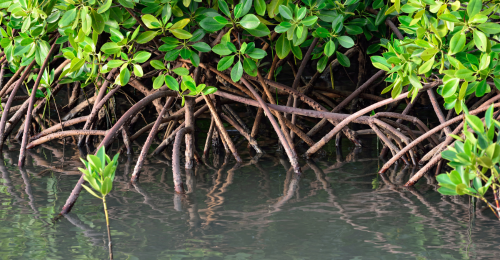
Panama’s mangrove forests are not just key to maintaining rich biodiversity in the country; they are a vital resource in global climate strategies.
As the world grapples with rising temperatures and carbon emissions, these coastal ecosystems are proving to be indispensable. Their ability to capture and store significant amounts of carbon dioxide makes them powerful tools for mitigating the environmental impacts of climate change.
Mangroves in Panama can store up to four times more carbon per hectare than tropical forests. With approximately 183,774 hectares of mangroves across its coasts, Panama is among the top countries for coastal carbon storage capacity. This makes these ecosystems a key element of the nation’s climate mitigation policies.
Digna Barsallo, the National Director of Coasts and Seas at the Ministry of Environment, highlights the importance of mangroves for reducing greenhouse gas concentrations.
To maintain its international standing, Panama is developing its National Chapter of the Global Mangrove Alliance. This initiative, part of the Blue Natural Heritage project led by the National Audubon Society and the Audubon Society of Panama, aims to protect, restore, and sustainably utilize these vital ecosystems.
Efforts are also underway to strengthen governance frameworks for mangrove conservation. Collaborating with the International Platform for Ocean Sustainability (IPOS), Panama is standardizing mangrove regulations and working with experts to consult across sectors. The goal is to enhance coastal resilience and recover 1,800 hectares of mangroves over the next three years.
Panama has six RAMSAR-recognized mangrove wetlands, celebrated for their ecological significance and biodiversity. These sites include Panama Bay, Gulf of Montijo, Punta Patiño, Damani-Guariviara, San San Pond Sak, and the Matusagaratí Wetland Complex, which was declared a National Park in March 2025.