


 Sign in
  Create Account



Bill weakens the protection of marine ecosystems in Panama
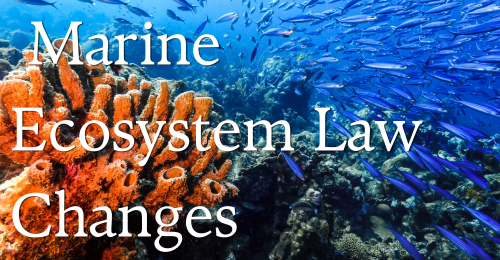
On Wednesday, April 29, the National Assembly approved Bill 571 in its third debate. This initiative aims to reshape the protection framework for coral reefs and the ecosystems associated with them.
After four years of Law 304 of 2022 being in effect—considered a milestone for establishing the comprehensive protection of coral reef systems and their associated species— Bill 571 and the modification of Article 12 present new challenges for the environment.
While Law 304 categorically prohibited any construction or intervention in reefs, seagrass beds, and associated ecosystems, the new text introduces a change in the way “seagrass beds and their associated ecosystems” are managed, by transferring to the Ministry of Environment the power to regulate any intervention in these habitats, which eliminates the restrictive character that previously protected these ecosystems.
In the case of coral reefs, the initiative adds a new article. In these ecosystems, construction, modification, or any activity that causes harm to the water or the substrate will not be permitted if there is “direct damage.”
According to environmental organizations and biologists, this opens up a wide margin for interpretation. They expressed that weakening these legal safeguards would grant a margin of discretion that could jeopardize the overall health of the marine ecosystem.
Scientific opinion
CIAM biologist Isaías Ramos warns that the reform represents a step backward from the current protection scheme, shifting from an explicit prohibition of construction and any impact—direct or indirect—on corals and seagrass beds to a model in which these interventions could be evaluated and potentially approved by the Ministry of the Environment.
With more than two decades of fieldwork, covering virtually all the reefs of the Pacific and the Panamanian Caribbean, marine biologist Héctor Guzmán argues that the proposed reform ignores the historical fragility of these ecosystems.
Remember that, since the nineties, scientific research had already warned that the coverage of live coral in the country did not exceed 30%, an early sign of the deterioration of its ecological health that motivated the creation of a protection regulation built over the years with contributions from scientists, authorities, NGOs, and productive sectors.
Guzmán warns that relaxing the law not only breaks the built consensus but would also favor particular interests, resulting in a significant loss for the country’s marine resources.