


 Sign in
  Create Account



Panama Launches National Plan for Sea Turtle Conservation
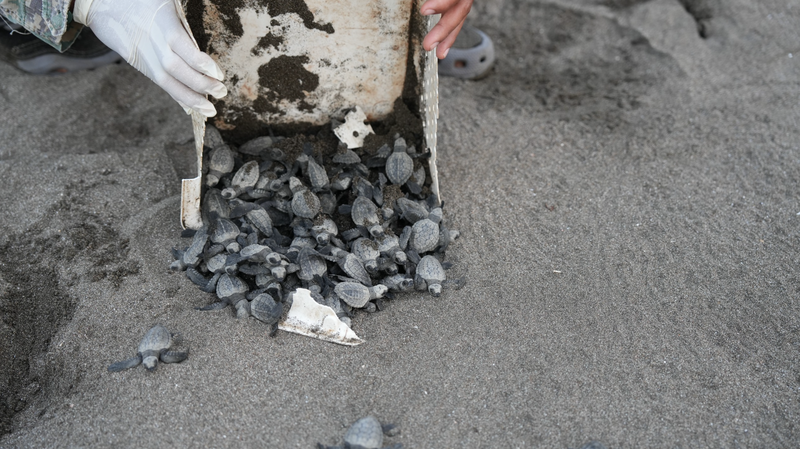
The Ministry of Environment (MiAMBIENTE) has launched a Plan for the Conservation of Sea Turtles of Panama in 2026.
The initiative “Strengthening the actions of protection, conservation and sustainable management of sea turtles in coastal communities of the Pacific and Caribbean of Panama integrates scientific, community, and institutional actions for the protection of sea turtles. With a broad geographical coverage, encompassing various provinces and regions, guaranteeing a comprehensive approach at the national level for the protection of these migratory species.
- More than 340,000 sea turtles released in 2025 demonstrate a coordinated effort (Caribbean 17,321 and Pacific 327,525)
- 21 nesting beaches nationwide
- 2,882 people impacted in 2025 (communicators, students and technicians)
- More than 40 extraordinary activities scheduled for 2026
A Collaborative Effort to protect Sea turtles
The plan represents a coordinated approach, bringing together scientific, community, and institutional efforts across various provinces and regions. Key actions include nocturnal monitoring on nesting beaches, environmental control and surveillance, coastal cleanups, educational programs, rehabilitation of hatcheries, and thermal monitoring of nests. The initiative is structured around six fundamental axes: research, environmental education, governance, community participation, direct intervention, and long-term sustainability.
Community Engagement and Empowerment
Central to the plan is the active involvement of coastal communities. The initiative encourages cleanup days, environmental fairs, training, and local action programs, empowering residents as guardians of their environment. The goal is to promote sustainable practices and the active protection of ecosystems.
Successes and Future Plans
In 2025, Panama released more than 340,000 sea turtles, underscoring the nation’s commitment to conservation. At least five species of sea turtles, including the leatherback (Dermochelys coriacea), hawksbill (Eretmochelys imbricata), green (Chelonia mydas), olive ridley (Lepidochelys olivacea), and loggerhead (Caretta caretta), nest in Panama. Many of these species are endangered, highlighting the importance of ongoing conservation programs.
Governance and Overcoming Challenges
The plan also includes establishing a national committee, updating diagnostics, and implementing regulatory adjustments to enhance inter-institutional coordination. More than 40 extraordinary activities are planned for 2026 to strengthen institutional presence in the territory. A recent incident in Piña (Colón), where residents assisted a disoriented leatherback turtle, illustrates both the challenges and the vital role of community intervention in reducing risk factors like artificial lighting, predators, and human pressure.
As Panama solidifies its position as a strategic point in the migratory routes of the Pacific and the Caribbean, it bears a crucial responsibility in protecting sea turtles. The challenge lies in ensuring that efforts translate into a sustained recovery of species, integrating science, communities, and environmental governance.