


 Sign in
 Create Account


Earthquake in Panama
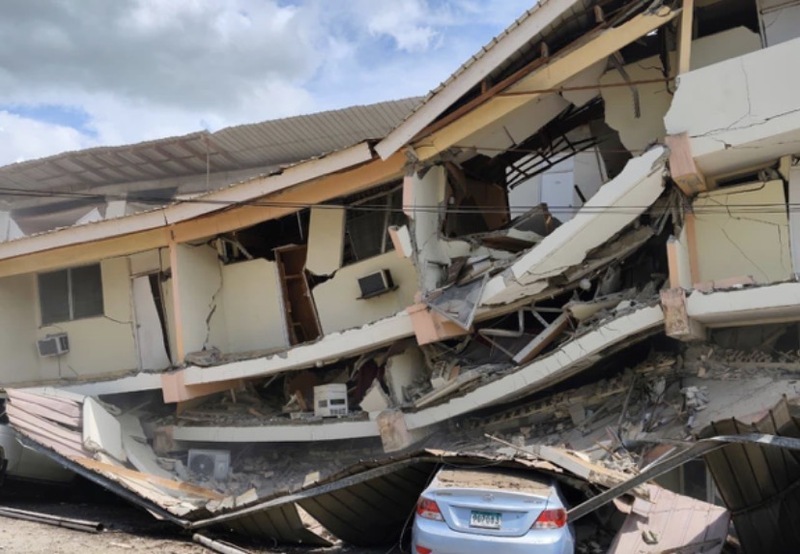
A 7.6 magnitude earthquake in Panama has triggered tsunami warnings along the west coast of Central and South America, according to the US Geological Survey (USGS).
Tsunami warnings along the west coast of Central and South America have been canceled according to the US Geological Survey (USGS).
The earthquake in Panama hit along the southern coast of the country, with an epicenter about 14km (9 miles) southwest of the community of Pitaloza Arriba, the USGS said.
The Institute of Geosciences of the University of Panama said the quake struck just before 1 pm local time near the southern town of Tonosí. It was felt throughout the country. The Panamanian institute said that a second 6.0 magnitude earthquake struck soon after, at 1.22 pm.
The president, José Raúl Mulino, said he had asked a key minister to call for calm. “What happened should not be used to generate alarm and disorder,” Mulino wrote on X.
Local newspaper La Prensa said that across the Central American country, buildings, schools and homes were evacuated. Air travel has also been disrupted.
Footage published by La Prensa showed severe damage to several buildings in the city of Penonomé, including the St John Baptist Cathedral. Other photos showed a highway to the west of the capital that had been completely cut in half by the earthquake. In Coronado, tiles fell from the Super 99 plaza, damaging cars; no injuries have been reported.
Tremors were felt strongly in the capital of Panama City, and Coronado according to witnesses. The Associated Press reported that buildings shook and visibly shaken residents gathered outside as they waited for news of the impact.
The USGS said hazardous waves were possible along the coasts of Panama, Costa Rica, Ecuador, Peru, Nicaragua, Guatemala, El Salvador and Mexico.
Update on Panama Earthquake
The United Nations report indicates more than 820 damaged homes, 419 affected educational centers, and at least 29 damaged health facilities. Some 38,000 people, including 8,300 children, need help.
These numbers are initial estimates from the United Nations report released on Monday, October 12th.
The report warns that the earthquake damaged more than 820 homes, affected health facilities, and damaged hundreds of schools. Furthermore, several communities continue to face difficulties accessing basic services, while authorities and humanitarian organizations work to assist the affected population.
Some of the most affected areas are in the provinces of Coclé, Veraguas, Herrera, and Los Santos. Isla Cañas has been evacuated, and in Búcaro and Tonosí, many people still don’t know when they will be able to return to their homes. They are currently staying in cattle ranches and makeshift shelters. In many towns, the situation has worsened due to heavy rains.
Along with their homes, many people have also lost their livelihoods. Some estimates suggest that more than 80% of Isla Cañas’ agricultural production was destroyed by the earthquake and the saltwater. There are more than a hundred rice, corn, melon, and watermelon farmers in the district.
The full economic magnitude of the damage has yet to be determined, but the farmers already know that a portion of their livelihood has vanished. Lack of drinking water is among the main concerns people face. There is also worry about the supply capacity of supermarkets and other establishments.
Adding to the earthquake damage is the threat of rain and landslides in the mountains, which could cause further damage and insecurity for families without shelter.
Trending Tags