


 Sign in
  Create Account



Sand extraction in Punta Chame
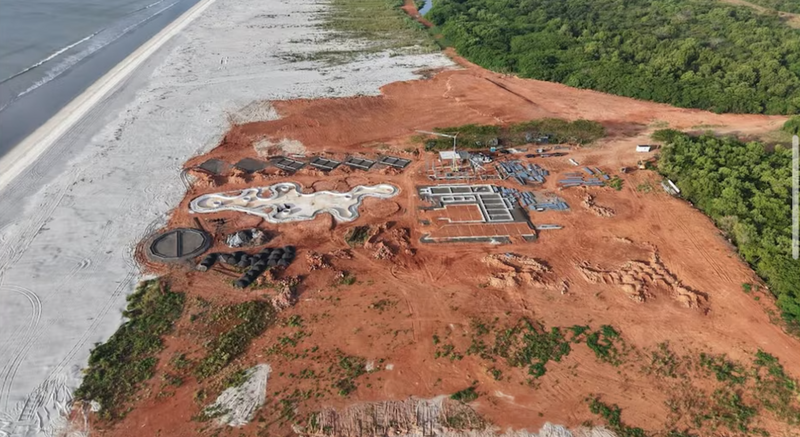
Residents of the Punta Chame district in Chame have taken to social media to report the illegal extraction of sand in their area, and the Ministry of the Environment ordered a stop to the activity.
The extraction of sand in Punta Chame poses a threat to the beaches, dunes, and coastal ecosystems. Following these reports, the Ministry of the Environment (Miambiente) activated its verification and enforcement protocols. Initial technical findings from the field indicate that sand extraction was taking place for beach replenishment in front of a tourism project under development, spanning approximately 2.5 linear kilometers (km).
To mitigate potential harm to the ecosystem, the Ministry of Environment has ordered the immediate cessation of this activity based on the precautionary principle. Concurrently, an investigation has been initiated to ensure compliance with existing permits, environmental regulations, and necessary management tools.
Coastal Erosion: An Expanding Concern
The events in Punta Chame are part of a larger issue affecting the Panamanian Pacific coastline. A study conducted by the Technological University of Panama (UTP), in collaboration with the Center for Multidisciplinary Studies in Science, Engineering and Technology (Cemcit-AIP), reveals that approximately 900 km of the 1,700 km Pacific coastline exhibits clear signs of erosion, a situation worsened by climate change and human intervention.
The research, which analyzed the coastline from 2000 to 2020 using satellite imagery, drones, and differential GPS, identified severely eroded areas, including Punta Chame, Darién, Chepo, and El Uverito Beach. In contrast, regions like Tocumen and Islas Cañas demonstrated sediment accumulation processes, highlighting that coastal dynamics can vary significantly even within the same region.
Gisselle Guerra, a researcher at Cemcit-AIP and coordinator of the Coastal Hydrodynamics Research Group, emphasized the importance of understanding the interplay between natural processes and human activities to develop adaptive measures that safeguard both ecosystems and the communities reliant on the coastline.
“Establishing the high tide line is now a priority in light of anticipated sea level rise,” Guerra cautioned, noting that coastal erosion is not an isolated concern; it has the potential to impact infrastructure, artisanal fishing, and tourism—vital sectors for the local economy. For coastal communities, the loss of beaches and dunes—natural sand formations created by wind action—poses an economic threat and a risk to homes and properties.
In light of this situation, Miambiente has reaffirmed its dedication to protecting natural resources, promptly addressing citizen concerns, and maintaining institutional transparency, ensuring that all actions are performed in accordance with the law and in defense of the country’s environmental heritage.
Trending Tags