


 Sign in
  Create Account



Whale Watching Season in Panama
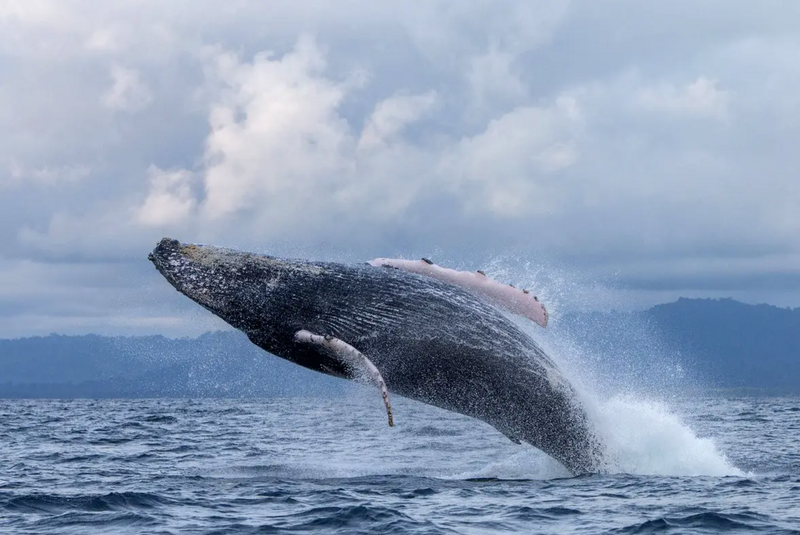
From July to October, Panama becomes a sanctuary for humpback whales, which journey thousands of kilometers to give birth and nurture their young.
Panama is one of the few countries in the world that hosts humpback whales from both the Northern and Southern Hemispheres. Some of these whales will make one of the longest migrations of any mammal, from their feeding areas off Antarctica and Chile to their breeding area off Central America.
When is Whale Watching Season in Panama?
Humpback populations migrate to Panama each year, creating two main seasons for whale watching in Panama: Northern Hemisphere populations (December-April) and Southern Hemisphere populations (July-October). Peak months for sightings are August and September.
Is Whale Watching in Panama regulated?
In Panama, whale watching is governed by Resolution DM-0144-2022, which outlines the guidelines that vessels engaged in this activity must adhere to:
- Maintain a minimum distance of 250 meters from whales and 100 meters from dolphins.
- Navigate at a maximum speed of 4 knots (approximately 7 km/h) within observation zones.
- Shift the engine to neutral when cetaceans are near the vessel.
- Limit observation time to 30 minutes per group of cetaceans
- Limit the observation time to 15 minutes when a mother is with her calf.
- Avoid chasing, surrounding, intercepting, or obstructing the natural movement of the animals.
Captains, boatmen, tour operators, and guides are encouraged to comply with regulations before and during each tour. Additionally, the ministry states that non-compliance with these provisions will result in penalties.
Where to see whales in Panama
Pearl Islands (Archipiélago de las Perlas) is a popular place for whale watching in Panama due to its proximity to Panama City. Las Perlas Archipelago is also considered the main habitat within the IMMA for the Southern Hemisphere. Humpback whale nursing, calving, and mating, with 20% of 295 individuals observed between 2003-2009 identified as calves (Guzman et al., 2014). Between 2003-2009, the population size of Southern Hemisphere humpback whales using Las Perlas Archipelago was estimated at over 200 whales per season and over 900 whales between all seasons (Guzman et al., 2014).
Gulf of Chiriquí (Boca Chica) is one of the premier departure points for spotting whales in the protected waters and islands of the Gulf of Chiriquí National Marine Park. Northern Hemisphere humpback whales have been reported to use the Gulf of Chiriquí (Curtis et al., 2022).
Coiba National Park is a protected marine area accessible from Santa Catalina. Visitors can spot both northern and southern humpback whales in this marine corridor. It is located 440 kilometers southwest of the Province of Veraguas, District of Montijo, Panama, and within the Gulf of Chiriquí. The park also includes eight smaller islands and 30 islets of volcanic origin. It covers an area of 270,125 hectares, 20% of which is land.
Pedasí (Azuero Peninsula): Isla Iguana off the Azuero Peninsula is also considered an important habitat for mothers and calves, which comprised 52% of all observed groups in the area. The northwest of the island contains the highest population density of humpback whales, with most documented sightings in waters less than 100 m deep (Ng, 2022).